Saturday, August 19, 2006

Solomon's Prayer

What would you do if God handed you the theological equivalent of a signed, blank check – totally free, no questions asked, no strings attached, and all that? What would you make it out for? How about good health? Pay to the order of “retirement security”? How about a little assurance of salvation? Or just something mundane, like a million dollars (or the equivalent in stock options)?

Something to think about – if God said to you, “Ask me for anything,” how would you respond? Would you come up with some kind of beauty pageant answer – peace on earth or an end to homelessness or that every little boy and girl in the world would be given a chance to flourish in life thanks to good dental health, or some such thing? Would you try to come up with the most altruistic sounding response possible, so that everyone within earshot (God included) would be duly impressed with your altruism?

It may sound weird, but it’s pretty much what happened to Solomon as recorded in 1st Kings chapter 3, “…and God said, ‘Ask what I should give you.’” Just like that. What do you want, Sol? King Sol could have asked for anything – power, money, respect, military success – anything! But no, not our hero. Solomon says, “Give your servant therefore an understanding mind to govern your people, able to discern between good and evil.”

An “understanding mind” that would be able to figure out what was up, to recognize the best way to go, to determine some sense of meaning in the complexity of life, and to tell the good stuff from the bad – this was what Solomon wanted. And he wanted all this for the sake of other people, so that he would be able to govern effectively – not for his own sake. And so God granted him that wisdom.

Although, if you ask me, Solomon already demonstrated a pretty elevated wisdom score by asking what he asked in the first place. So, was he wise because God gave him what he had asked for, or had God already given him the gift of wisdom, which he displayed in his remarkable prayer? I don’t know for sure, but it seems to me that too often people of faith minimize prayer to a simple wish list, as if prayer was comprised solely of asking God for stuff. I heard a man say recently that we need to ask for God’s help with everything, to realize that we are fully dependent upon God. As an example, he said, “As you spread your peanut butter on your bread, you should be saying, ‘God, help me to spread this peanut butter on this bread.’” My response (which I kept to myself) was to suggest that perhaps God would respond to such a prayer by saying, “Spread it yourself, moron, I have a few other things on my mind right now.” (Although God may choose some other word than “moron” I suppose, maybe “My beloved moron” or something.)

If God were to ask the church today, “What do you want, church?” what would God’s church say? Would the church ask for something on behalf of others, or would it ask for something for itself? I can hear it now, “O God, just make it so we don’t have to close our doors due to the fact that our congregations are dying off and no new people are coming to replace them because what we do here, although good and decent, is lifeless and boring and lethargic and completely lacking in the energy of your Spirit or any kind of new, creative, transformative initiative in ministry for the past forty-five years but if you will just get a couple of young families to come to our church and like the way we do things here then everything will be okay, Amen.” Or something like that.

“An understanding mind” is what Solomon wanted. He wanted to be able to make sense of it all. He was looking for meaning, purpose, vision. It seems God thought that was a pretty good idea, because in response God said, “I give you also what you have not asked, both riches and honor all your life.” And in response to that, Solomon worshipped. Imagine what might happen if a church undertook that process – honest prayer for clarity of vision for the sake of others, wisdom to hear God’s answer and strength to follow God’s way, and grateful worship in response to God’s faithfulness. Sounds pretty wise to me.

Wednesday, August 16, 2006

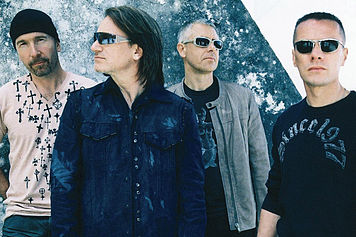
Further Proof that U2 May Very Well Be the Coolest Band EVER...

...in the car today, listening to "Vertigo," my five-year-old spoke a sentence I honestly never thought I would ever hear spoken.

"Dad, I believe that U2 may even be better than the Doodlebops."


It was a special moment.

Monday, August 14, 2006

Renewing the Church for the Next Generation

Over the weekend, Dad and I were keynote speakers for a Missouri Conference United Methodist Men Retreat. Since the retreat was located in southeast Missouri, however, it turned out to be a “St. Louis Area United Methodist Men Retreat” instead. No biggie. There were 70 men there - who were, by and large, a faithful bunch of typical Methodist Men, who joked a lot, sang a lot, ate a lot, and loved God a whole lot.

The average age was just about 60, and the youngest participant was nine. Since we were talking about “Renewing the Church for the Next Generation,” the attendees served as a living example of the issue at hand. The United Methodist Church does not have a “back door problem,” we have a “front door problem,” as Bishop Schnase frequently reminds us. It’s not that people are leaving the church in droves, it’s that they are not coming in in droves. (Anyone know what a drove is, exactly? Where can we get one?)

Anyway, one of the areas where we spent the most time this weekend was around “change.” But what we emphasized what not a change in worship style or technological savvy or the latest 40 day program or any of a whole mess of other gimmicks the church is likely to try. We tried to emphasize that the change called for is deeper and rougher and more profound than that. We are talking about no less than a change in the culture of the church itself, a new mindset when it comes to church, an emerging energy that emphasizes relationship, unity, and authenticity.

We were not talking about adding a guitar and drums and singing the latest Christian pop tune off the radio in worship every week.

We were not talking about throwing a bunch of the latest technology into the sanctuary with no idea about what exactly it will be used for.

We were not talking about buying the latest curriculum designed to appeal to young adults and starting a new Sunday School class with it.

People don’t come to church just to sing the latest song or see a nifty power-point show or read some author’s 12 easy steps to a better life. People come to church to encounter and be grasped by the living presence of God in the midst of a community of friends who share God’s love and grace unconditionally one with another. Last weekend, we were talking about radically reforming the culture of the church so that younger generations will experience that kind of transforming encounter when they come to church.

And furthermore, we talked about ways the church needs to communicate with younger generations to let them know that such an encounter is even possible in a church. There are many who yearn for such an encounter, but for one reason or another, would never set foot inside a church in order to discover it. As such, we talked about new ways of allowing the church to “leave the building” and step into the world, as it has always been called to do. Only now, since the world has changed so much in the last quarter of the twentieth century, the church isn’t sure how to make it happen.

One other thing we tried to emphasize was a shift in thinking from the church being in ministry “to,” “for,” or “with” young adults. Rather, the church needs to be thinking about the ministry of young adults. It is not as if “the church” and “young adults” are two separate groups, one of which (the church) is subject and one (young adults) the object of ministry. Young adults – like youth and children and retirees and everyone else – ARE the church. I think this may be the most difficult mindset to change.

I hope that we tilled some hard packed soil, and maybe even planted a few seeds over the weekend. In terms of renewing the church, I am excited about what is emerging. I sense a spirit of hope in the hearts of many people of faith, hope that is grounded in the mystery of God’s grace. We haven’t yet solved the church’s “front door problem” yet, but I get the idea that we are on the way.

Thursday, August 10, 2006

Tidbits - Lots of Places to Click!


First - Happy Birthday to my FANTASTIC wife Erin.
I love you, darling.
I have known this woman for seventeen years, and today she is thirty-five years old.
In another year, we will have known one another for half of our lifetimes. And I would not exhange those years for anything.

Second - check out this, which is horrifically real. And now this, which is hilariously not. (Hat tip.)

Third - A few weeks ago, we did a pretty cool thing in worship where everyone wrote down something they have to offer in service to God and brought it forward to the prayer rail. I posted the responses (anonymously of course) on the congregation's newsletter blog. It is pretty interesting, if you want to check it out.

Fourth - Missouri Tigers, Kansas City Chiefs both looking good - it's going to be a good season! I am ready for some FOOTBALL!

I'm out for the weekend - see my last post. Not a vacation exactly, but maybe a bit of retreat time. God is good!

Wednesday, August 09, 2006

Topic: CHANGE (Run away! Run away!)

Renewing the Church for the Next Generation is the title of a workshop my dad Jim and I are leading as a part of the Missouri Conference United Methodist Men’s Retreat this weekend. As a part of my part of the workshop, I will be discussing two prevalent attitudes I have seen in the church with regard to that most forbidding ecclesial topic: CHANGE.

Attitude number one is called, “We’re Not Changing.” This is the attitude that leads people to say creativity-stifling things like, “Because we have always done it that way” and its corollary, “Because we have never tried it that way before.” Many church people love the way they worship, do Sunday School, church committees, and the like, and they are unwilling to change any of it, or at best cannot see that a change is possible or desirable. Unwillingness to risk a change frequently leads to the lament that goes, “Why aren’t there more young people in our church?” (i.e. “How can we get them to be like us?) This is the wrong question to ask. The only possible way to address this question stagnates a church, because it means trying to figure out how to somehow get young people to enjoy/appreciate/buy in to the status quo, and more often than not, that ain’t happening.

Attitude number two is called, “Change or Die.” According to this perspective, the church must change in order to keep itself from dying off. A catch phrase of this attitude is, “The church is one generation away from extinction.” Many church people expend large amounts of time and energy wringing their hands about the low number of younger people in the pews, and frequently implement haphazard changes in order to remedy that situation. But because those changes are motivated by self-preservation alone, they are not the long-term, comprehensive types of changes that are called for. It can result in a kind of “change for change’s sake” mentality that creates a frenetic atmosphere in which the church’s ministry is disjointed and flimsy, with the church doing whatever it takes to please people so that they will stick around for a while.

The third attitude, the way I will offer as my preferred way, is called, “Change as an Act of Faith.” This way affirms both a desire to be faithful to the calling of disciple-making, and also the desire to change the way things happen in order to more fully communicate with new generations of people. The underlying idea is that, in order to stay faithful to God’s call, we must change. And in the process of changing, we will be reaching new generations for the sake of Christ. We are not changing in order to keep ourselves alive, though. There ought to be no hint of narcissism in the church’s evangelism ministries. The focus is God. We are changing because God has called us to tell the story, and in order to tell the story, we have to translate it in such a way that it can be understood.

So, that’s a smattering of what I’ll be sharing this weekend with the United Methodist Men of the Missouri Conference. I intend it to set the stage for discussion of some more tangible topics. What do you think? Is it a message worth sharing? Would you change anything? All comments welcome …

Monday, August 07, 2006

Nathan and David - "Love the Sinner, Period"

Yesterday I preached about Nathan, King David’s prophetic advisor. I focused on the lectionary text (2 Samuel 12) in which Nathan encourages David to repent of his quite nasty sin – the whole murder-Uriah-to-marry-Bathsheba incident. Naughty, naughty David!

What strikes me is that Nathan did not come into the king’s room and beat David over the head with the Bible in order to get him to repent. He did not condemn David, nor was he hateful, nor did he come across as self-righteous or smug. Seems to me that Nathan was able to convince David to confess and repent largely because he had a relationship with David. He told David a story, a story that, Nathan explained, applied to David’s own actions. And because of the trust involved in their relationship, because of the respect they developed over time together (2 Samuel 7, 1 Kings 1, 1 Chronicles 17, 1 Chronicles 29), they had an understanding that led David to repent of his sin.

And when he did, Nathan offered words of grace, “Now the Lord has put away your sin; you shall not die.” Oh, there would be consequences to David’s naughtiness; there are always consequences. But the consequence David himself deserved was death. He himself expected it (see verse 5). But Nathan, as God’s prophet, announced that David was forgiven. (The question of why Bathsheba’s child died is a-whole-nother sermon!) God’s grace is not about getting what we deserve, it is about getting what we need.

How many of us can be “Nathans” for another person? How many of us are strong enough in the unity of the spirit and the bond of peace to be able to walk alongside a sister or brother who is deep in sin, nurture our relationship, develop trust, respect, and compassion for them (and they for us), and actually love them enough to be able to give them a gentle nudge back onto the path that God has in mind for them?

It’s like how only your very best friends will let you know that your zipper is down in public. People who don’t care about you will let you go on looking like a fool. Only your truest and best friends will say, “Psst! X.Y.Z., P.D.Q.” (Speaking from personal experience.)

Come to think of it, the only people Jesus really got angry with were the hypocritical church leaders who were telling the people to do things God’s way and follow the law, but were not doing so themselves. He got all fire and brimstoney with people who were guilty of putting their own interests above God’s - Pharisees, Scribes, Money-Changers, and so forth. Other “tax collectors and sinners” were not targets for his Bible thumping tirades, instead he did things like eat supper with them, tell them stories, and protect them from angry, stone-wielding crowds. In other words, he had a relationship with them, and then asked them to, “Go and sin no more.”

There is a difference between being convinced that something is a sin and how we choose to act on that conviction. Some people have chosen a “love the sinner, hate the sin” approach. I have chosen a “love the sinner, period” approach. A loving relationship built on trust and respect makes all the difference.

Wednesday, August 02, 2006

Universal Worship

There is a really cool comment thread going on over at Bill Tammeus’s blog! It started with a post about a Scottish worship service for people who believe in God but do not care for religion. They call them “universal worship experiences,” and describe them this way: “Rather than being based around stories about Jesus Christ, Muhammed or Buddha, the sermons will focus on universal themes such as love, how people can conduct their lives in a peaceful manner, support one another and respect the planet.”

It seems to be an attempt to offer a worship experience to people who are disillusioned, discontinued, or generally disgusted with organized religion. The responses on Bill’s blog are really fascinating, and worth a few minutes of reading. I can best summarize them this way – (and this is not labeling, not over-simplifying, just summarizing!)

- Some say, how can this be authentic, theologically sound worship? It seems to be a bunch of people creating God in their own image and making themselves feel comfortable about what they believe without the rigor scripture or tradition to hold them accountable.

- Some say, this is a good thing for people with faith in God, but no faith in how God has been codified by humanity. This experience frees people to worship the God who is, who was, and who ever shall be, instead of the God that a specific group of people describes and defines according to their own cultural lens.

- Still others say, I have found a spiritual home, and am quite happy with my religion, my relationship with God, my particular path. However, my path to God may not be yours, and so an experience like this, while it wouldn’t work so well for me, may create for someone else an opportunity to encounter God, and so it should be encouraged.

- Finally, there is probably a group who is reacting by shrugging their shoulders and saying, I don’t really know enough about this endeavor to make a judgment yet.

I think I am mostly in the third group there. I am Christian - incarnation, crucifixion, resurrection, and all that kind of stuff. But I am also pretty firmly committed to the idea that being a stumbling block for another person’s relationship with God is not a good idea. In fact, scripture records some pretty harsh words, uttered by none other than my Lord and Savior Jesus Christ and echoed other places, about those who are stumbling blocks to others. (Something about a millstone around your neck, if I remember correctly.)

I lament that I may be a stumbling block getting in the way of someone’s relationship with God just because I am a Christian, but there it is. Right or wrong, the perception is out there. I saw a "Family Guy" episode recently where Brian said, “Let’s see, ‘Believe like I do or else I’ll hurt you.’ Yep, sounds like a church!” I have spoken with numerous people who have said, “I’d like to come to church, but I don’t feel like I will be accepted there.” A friend recently emailed me, “Considering the hatefulness and exclusivism and intolerance I hear every week in church, I sometimes wonder if I’m wasting my time being a Christian.” It was not the first time I had heard such a sentiment.

I want, with all of my heart, for all people to be in right relationship with God, and I believe that God wants that, too. If my stubborn insistence that they do things my way is a stumbling block causing them to sin, that is, keeping them from living in right relationship with God, then I must give up that stubborn insistence and seek another way to set the stage so that God might enter the scene.

Maybe an interfaith, low pressure, relevant and meaningful worship service will be how God enters the hearts of people for whom walking through the doors of a church, temple, synagogue, or mosque building would be unthinkable. (As a friend wrote recently, “Feels like a lion being thrown to the Christians.”) I believe God is powerful enough to work in the midst of anything, and will find a way to work in the midst of a “Universal Worship Service,” too. Maybe they are creating God in their own image, but maybe God can find a way to work with that. If they are unreceptive to encountering God in a traditional religion anyway, trying something a little theologically “iffy” couldn’t hurt, could it?

Saturday, July 29, 2006

Scripture, Tradition, Experience, and (Circular) Reason: The New Quadrilateral?

Here’s what I’m talking about. Today in our Kansas City paper, a prominent mega-church pastor wrote a little column answering the question, “How far should Christian tolerance of other faiths go?” Of course, he was set up, really. Using the red-flag-raising word “tolerance” isn’t really fair, since the word begs definition and clarifying before anyone can talk about it. Plus they only have him a few inches of newspaper space to answer, and I’m sure that if had been given sufficient room, he would have said more.

Nonetheless:

He first makes a helpful if unnecessary distinction between “tolerance” and “love” – meaning that while we love everyone, we don’t necessarily need to tolerate them. With this distinction, we can already see where he is headed. He writes, “We know that the God’s Word is true [sic]. The Gospel of Jesus Christ is the bedrock of the Christian faith. Anything more, anything less, any alternative religious system cannot also be true.”

(Wait, “anything more?” Huh?)

He goes on to say that although we Christians love everyone, “it is not our place” to “choose which things are true or false.” And that (here it comes … are you ready?) since “Jesus himself” says he is the truth (quoting John 14:6), “who are we to say differently?”

Here is a strictly hypothetical conversation:
Me: You are a Christian, huh?
Mega-Church Pastor: Yes, sir!
Me: Hey, me too! That’s great. So that means you believe Jesus is the truth, right?
MCP: Yes, absolutely.
Me: Hey that’s cool. Can I ask how you know that?
MCP: Because he says he is.
Me: (awkward pause to consider the logical flow of the conversation) But how do you KNOW that what he is saying is true?
MCP: Because he is the truth.
Me: And … let’s see…how do you know he’s the truth? Oh yeah, you know that because he says he is, right?
MCP: That’s what I wrote in my column, and I’m sticking to it!

My point is not so much that this one pastor might have said more about Jesus-as-truth had he been given sufficient time and space to do so. (Not to mention what exactly he meant by “anything more” than the Gospel – like, God?) My point is that people read this column and think, “What in the world? Why would I ever want to be a part of something so irrelevant to my life? I am seeking purpose, meaning, I want something to live for, I want something that will make sense! I had better look somewhere other than the church to find that, I guess.”


And thus there is all the more work to do for people of faith who want to share the Gospel of Christ with our neighbors in a way that doesn’t resort to self-referential jargon to accomplish that mission.

In the meantime, I found this while preparing tomorrow’s sermon:
“I pray that you may have the power to comprehend, with all the saints, what is the breadth and length and height and depth, and to know the love of Christ that surpasses knowledge, so that you may be filled with all the fullness of God.” (Ephesians 3:18-19, emphasis added)

There we go! Maybe Christian epistemology is a worthless endeavor after all, Tim Sisk! That which we are seeking to know surpasses knowledge itself. Reminds me of something Brian McClaren wrote, “One doesn’t learn what God is like in a library or pew and then begin to love God in real life. One begins to love God and others in real life. In the process one learns what God is like – and one might be driven to the library and pew to learn more. Anyone who doesn’t embark on the adventure of love doesn’t know God at all, whatever he can say or define or delineate, for God is love” (Generous Orthodoxy, 207). I marked that one in my margin!


Or something Linus said to Charlie Brown once, "To know me is to love me!" But maybe when God says it it is, "To love me is to know me."
Hmm ...

Friday, July 28, 2006

Full House

Hey! Great news! We are now providing care for two wonderful children as their foster parents for a while. And so far, so good.

And there is kind of a fun story that goes along with this news, a story that starts long before we knew we would be having two foster kids...

It seemed like a good idea at the time. "Sure," we said to my parents, "We'll watch your dog for you while you go on vacation." After all, she is a big, old, slow dog who doesn't do much but lie around the house all day. No sweat.

So then, when my brother called, asking if we would watch his dog for the weekend, the same weekend we were watching my parents dog, we thought we could handle it. His dog is a ... hmm ... how to put this delicately? ... smidge more hyperactive, shall we say. But for just a weekend, we can do that. "Sure, B. Bring her on over."

Then he calls back, "Umm ... do you think you guys maybe could watch her for three or four more days? Our plans have changed." With a bit of hesitation, we say, "Uh, okay." Now, you have to understand that when I say the dog is a smidge more hyperactive than most dogs, I mean she is absolutely insane.

So we were to have four dogs in the house, our two plus the two we were watching. One of our dogs is in the old-and-not-very-active category, and one is a-smidge-more-hyperactive. Not absolutely insane like my brother's dog, but up there. But we would be fine - a little crazy, but fine.

So that, of course, is when we got a call from a case worker, wondering if we might have two foster kids come to live with us. It was the call for which we have been waiting these past four months, so of course we said "YES!" And we had the pre-placement visit which went very well, so two days later, here they are! And they are absolutely wonderful. They have seen and experienced way too much in their short lives, and we are all taking our time about getting to know one another, learning to trust each other, and basically figuring each other out.

Thus we are currently housing two grown-ups, four children, and four dogs, two of whom are a smidge hyperactive. Of course, this is also the week my grandparents are moving from North Carolina to Dallas, and a bunch of stuff from their house will be coming to our house in Kansas City next Monday, some to stay and some for temporary storage. Plus I caught a nasty summer cold that kept me home Wednesday, we have four church people in the hospital I need to keep tabs on, and a funeral set for next Monday morning. Other than that, not much going on!

It's all good! We are still smiling, at least at the moment. But the last week of July, 2006, will go down in Bryan family history as quite a remarkable week, to be sure.

Sunday, July 23, 2006

Pastoral Care Triage

Bill Tammeus writes good stuff – about faith, the church, ministry, and life in general. This week, he wrote about pastoral care. Using a touching story about a young man who received care from a non-clergy caregiver, Bill wrote that some of the most meaningful pastoral care a person can receive come from laity, rather than clergy.

He goes on to say that many congregations are simply not set-up to equip the laity to do pastoral care. Why not? He gives three reasons.

Reason 1:
“Sometimes it’s because people act like they belong to a club with a hired manager (the clergy) instead of to a church that requires ministry of some kind from all members.”
I know congregations like this, don’t you?

Reason 2:
“Sometimes it’s because clergy are insecure and feel threatened when competent laypeople express an interest in living out their faith by offering pastoral care to others.”
I know clergy like this, don’t you?

Reason 3:
“But mostly congregations fail in this area simply because their members are so busy just surviving, just doing all that must be done to work, rear children, pay the mortgage and nurture family relationships that they think they have no time to spend” doing pastoral care.
I know … just about everybody fits in here … don’t you?

I have developed a kind of pastoral care triage by which I work, in order to keep things all in balance, or, at least as balanced as possible. I have to start out with the confession that I will not be able to visit every person who needs a visit. That is hard for me to say, because I am a type “A,” first born perfectionist with a pretty advanced case of “People Pleaser-itis.” It is hard for me to acknowledge that I am unable to be all things for all people. But the truth is, I simply cannot provide pastoral care for everyone who needs it.

But I try very hard to provide pastoral care to everyone who asks for it. Triage level one is people in the hospital and their loved ones, family and friends of people who have just died, and people who come to me with immediate crises, situations in their lives that are urgent, spiritual or emotional needs that they need to talk about. Providing pastoral care at this level takes up a lot of time. In fact, it takes up just about all of my week that isn’t allotted to something else like worship planning, sermon writing, study preparation, correspondence, and the like.

That leaves out triage level two which is comprised of people who, for physical, spiritual, or emotional health reasons we need to sort of “keep in touch with” more intentionally. They are not in immediate crisis mode, but are still very fragile, very vulnerable. This group is ministered to by our able and dedicated group of Stephen Ministers. I cannot commend this program highly enough for a church wanting to expand its care-giving ministries. The Stephen Ministers in our congregation are compassionate, well-trained, and have a clear understanding of their role in the life of the church. I am so grateful for them.

There is another level, though. This group is comprised of people who are not in immediate crisis, and who are not in an especially vulnerable place, but who just may not be able to get out of their house, or may live in a nursing home or care facility. Some refer to these people as “shut-ins” or “homebound” persons. I visit such persons only rarely. I wish I could more often, but the reality is that I cannot. Fortunately, we have a gifted and compassionate man who has answered God’s call to coordinate (as a volunteer staff member) the visiting ministries of our congregation, and his focus is on people in this category. One of his ongoing challenges is to equip and train more visiting ministers to stay connected with God through their church.

I guess I am lucky to be serving in a congregation who doesn’t think that I am the hired manager of their club. Also, I try to encourage and equip parishioners to offer pastoral care in various ways without any fear or insecurity that they will be somehow usurping my role. My prayer is that we will all not end up being “so busy surviving” that we end up unable to care for one another as we should. A church whose members care for one another is a healthy church. And a pastor who is fortunate enough to be a part of such a congregation is a healthy pastor, as well!

Friday, July 21, 2006

Jesus Scores a Big-Time Endorsement Deal!

Let us stand and sing our opening hymn:

Here comes the King, here comes the big number one!
He's Jesus Christ, the King, he's second to none!
The King is coming, to save us all!
When you say Christ, you've said it all!


Hat tip. Link.

Nifty Blog Idea

One of my friends has started a blog called STILL: Life. Every day he posts a photograph that in some way, shape, or form documents his day. But he has given himself a rule - there can be no people in his pictures. It has been really fascinating to visit STILL: Life every day and see his pictures and read the titles to his posts. Go on over and check it out.

Wednesday, July 19, 2006

Our Fifteen Minutes (Actually One Minute, Thirty-Five Seconds)

Last week a long lost friend found me by googling my name. It has been really great to reconnect with her.
One of the things she found on google, which I had almost forgotten about, was a news story that UMTV did about my family. You can watch in from the umtv.org archives by clicking here. Keep in mind that it was three years ago, and my hair is much better now!

Rambling Thoughts: Service

(The following is a post written by Bishop Monk Bryan, my grandfather, whose "rambling thoughts" about God, church, and life in general are a periodic feature of Enter the Rainbow, depending on how freely he will offer them!)

I have just learned a bit about those strange people called "Methodists".

Through the United Methodist Committee on Relief, they have sent :
$ 8,000,000.00 to help after the earthquake in Pakistan.
$40,000,000.00 to help after the tsunami in Indonesia.
$80,000,000.00 to help after Katrina.

And, they have sent over 1,000 work teams and over 100,000 people to work and help if relief, recovery, and rebuilding along the Gulf coast after Katrina. To snatch a figure out of the air, if these people worked 40 hours, that would total four million hours. That is an investment of each person's life.

Tuesday, July 18, 2006

Truth in the Bible, Part 3

Forgive me, please, if I seem to have over-simplified anyone’s personal theology in a previous post. That is surely not my intention. I am not so much interested in confronting anyone else’s theology in this series of posts as I am in working out my own. There were several very thoughtful comments after the last post, very diverse in perspective, and quite helpful.

One line of conversation involves the starting place of knowledge – shall we risk oversimplification and boil it down to “scripture” or “experience”? Some will claim, “I start with scripture.” Some will claim, “I start with experience.” Actually, both are right in a way.

Truthfully, none of us “starts with scripture” from a perspective completely untainted by our experience. When we are honest with ourselves, we have to confess that everything we know about God has been shaped by a lifetime of experience. Parents, friends, teachers, preachers, encounters with nature, etc. all shape the way we read the scriptures, either positively or negatively.

And at the same time, none of us has such a unique life experience as to separate us from certain central truths that are a part of who God is and who God desires that we become. To elevate life experience to a position higher than God is just as idolatrous as to elevate that fancy wood carving of Sponge Bob Spare Pants to such a position. (Just wanted to make sure you were still paying attention!)

For example, I would feel a little odd saying, "Based on my life experience, God does not desire peace on earth," because peace is a central truth of God’s identity. It is articulated in the Bible, it is an important part of many different faith traditions, it is a good and desirable way of living, and I cannot point to anything in my life experience that would contradict that truth.

But – somebody might! Like my theology professor at Saint Paul always says, “What you see depends upon where you stand.” How about a child somewhere in the inner city whose only experience is daily drug deals, weekly drive-by shootings, and constant fear? How about a Middle-Eastern child who knows only the imminent danger of either a market place bomb or a fully armed tank? It would be hard to convince such a person that, simply because I read it in the Bible, it is true that God wants the world to be at peace. Their own life experience tells them otherwise. I will have to be able to say something else, something reasonable, something grounded in real life experience, something that will make a difference to this one who so desperately needs to know about God’s peace.

Last time, Larry B. wrote, “I personally think scripture has to be backed up by reason for it to hold any personal meaning and depth. God's not changed by our questioning, nor does He reward blind obedience any more than fierce struggle - grace is an undeserved gift.” (I’m telling you, this guy needs his own blog!) He is right, of course. God is not at all threatened by our desire to know more, to understand more fully, to grow closer to God and to become the people God desires that we become.

The questions are “How do I know what I know?” and “Why do I believe what I believe?” and “How did I get to where I am?” If the response, “Because it says so in the Bible” is not fully sufficient for me, does that make me a bad person? Does that diminish my faith? Does that make God love me less? I sure don’t think so. I hope not, because that’s where I find myself these days. But all this thinking and writing about such heavy stuff is making my brain weary. Next post, I promise to lighten up!

Saturday, July 15, 2006

Truth in the Bible, Part 2 - "What's Wrong With Sturking?"

A few weeks ago this guy came into my study for a little chat. In the course of the conversation, he said that a certain activity was a sin, and all you needed to do to know that for sure was “read the Old Testament.” I chose not to challenge him at the time, but his comment has been on my mind since then. It has been in the mix with the things I mentioned in my last post, and can serve as a case study for this one.

For the sake of conciseness, let’s make up something to call the certain activity we were talking about – how about “sturking”? And let’s say that somewhere in the Old Testament it says rather unambiguously, “Thou shalt not sturk.” Now, the fun begins!

Try this first:
Why does the Bible say, “Thou shalt not sturk?” Because it is wrong.
How do we know sturking is wrong? Because the Bible says it is.

Doesn’t work too well, does it? Circular reasoning.

Now try this:
Why does the Bible say, “Thou shalt not sturk?” Because it is wrong.
And why does the Bible say that sturking is wrong? Because sturking involves hurting another person. (Just making that up, okay?)

Aha! That works better. Now there is something else supporting the idea that we should never, ever sturk. In other words, it is not wrong because the Bible says it is, but rather the Bible says it is wrong because it involves hurting someone, and hurting someone on purpose, while it is not universally wrong (think of getting a shot from a doctor), in most contexts it is.

So back to the conversation above, the guy says, “Sturking is a sin. To know that, all you have to do is read the Old Testament.”

I might have replied, “But why is it in the Old Testament?”

He might have responded, “Because it is wrong,” which doesn’t work so well for me.
Or he might have said, “Because sturking involves hurting another person, something that is (almost) universally considered to be wrong,” which would work better.

But what if the Bible just says, “Thou shalt not sturk” without specifying an underlying reason for it? In a situation like that, we have options as to how we respond. Some possibilities are:

a - “I don’t think sturking is wrong, so the Bible must be wrong.”
b - “I don’t think sturking is wrong, so let’s figure out through prayer, study, and reflection why the Bible says it is.”
c - “I do think sturking is wrong, and here is the implied underlying truth to which the Bible is pointing.”
d - “I do think sturking is wrong, because the Bible says it is.”

I’m thinking that people with responses “a” and “d” are not going to have any fun talking together. But it is quite possible that people with responses “b” and “c” can somehow manage to get along, go out for lunch, and maybe even have a fruitful conversation about sturking through the ages.

Here’s what I know now: I believe that God desires this world to be a place filled with love, peace, justice, humility. I believe this about God. Furthermore, I believe that the Bible is the God-inspired expression of those divine desires. But I do not believe that we should “do justice, love kindness, and walk humbly with God” because the Bible tells us to. Rather, I believe we should do all that stuff because God wants us to.


If we can do so without sturking anyone, so much the better.

Friday, July 14, 2006

Laughing Out Loud

I know this one is old and you have probably seen it before, but I laugh out loud every time, so I'm sharing it. I love you, mom!

Wednesday, July 12, 2006

Truth in the Bible - Part 1

In his book, “A Generous Orthodoxy,” Brian McClaren seems to simply take a little taste of what he likes from each dish of the Christian smorgasbord, and leave the other stuff behind. I guess that’s okay, if you are a fan of smorgasbords, but if you prefer to order from the menu, you probably won’t like his theology. His is the potluck supper of theology, where if you don’t like something that someone brings to the table, you just leave it off your plate.

I am most fascinated by his honesty about how he got to where he is, and how he continues to be formed by God. I love his answer in the final chapter to the question of whether his Christianity is orthodox: “A little, but not yet” (p. 333). Being orthodox doesn’t mean having everything “right,” says McClaren, but living in a mode of seeking and seeing that opens up the possibilities that God has put out there.

And so I have been thinking lately about the Bible, specifically thinking about how the Bible forms and informs orthodoxy as McClaren sees it, as a mode of living out one’s relationship with God. Along with McClaren, I believe that the Bible is “a gift from God, inspired by God, to benefit us in the most important way possible: equipping us so that we can benefit others, so that we can play our part in the ongoing mission of God” (p. 177). I consider the Bible to be the inspired word of God, and I’ll admit that I bristle a bit when those who differ with me accuse me of not honoring it as they do, simply because our interpretations differ. I believe the Bible contains truth, and discovering the truth draws one closer to God. This is not the same as being “right,” by the way, but rather seeking to know the truth, so that the truth might set one free – not per se in the knowing of it, but in the seeking. The great adventure is in the quest, not in the discovery.

And thus, my question du jour about the Bible is: “Is a thing true because the Bible says it is, or does the Bible say a thing because it is true?” This is a profoundly important theological and epistemological question with which people of faith must wrestle. And I don’t think it is adequate to answer this with a both/and answer, as in, “Yes, the Bible says things because they are true and also things are true simply because the Bible says they are.” I think maturing in faith requires an either/or answer to this question.

So either a) things are true because the Bible says they are; or b) things are true and so the Bible says they are.

Example: The Bible says “God is love.” Is God love because the Bible says so, or was God love already, so the Bible reflects that truth? If it is the former, end of discussion. But if the latter, the discussion has only just begun. That goes to the question of epistemology – how do I know that God is love? Is it because Bible says so? Or maybe I learned it first from reading the Bible, and other experiences in my life have confirmed it? Or maybe somebody taught it to me at some point in my youth, and upon reading it later in the Bible, it clicked into place?

I have a few more posts on this topic that are percolating right now, but are not fully brewed yet. I’ll be sure to pour out a cup when that happens. In the meantime, I welcome any responses, reactions, thoughts, musings that my meager ramblings may elicit.

Friday, July 07, 2006

Nana, Memory, and Life Meaning

One of the tasks I accomplished while in Lake Junaluska last week was photographing my grandmother’s art work. Nana died in 1989, and was for all of her life an artist – painting, needlepoint, music. She is my family’s inspiration, our muse. She provided the spark that lit the artistic fire in our familial hearts. She taught me to see all the colors in a sunset one evening some twenty years ago, while we were walking around the lake, gazing into the mountains.

Last week, we were spending our vacation with my grandfather, Bishop Monk Bryan (or, if you know him as well as I do, “Daddy Monk”) and his wonderful wife of the past fourteen years, Twila (the widow of Bishop Mac Stowe, by the way), who are within a few weeks of moving away from the beautiful mountains of North Carolina to live in a retirement community in Dallas. (92 years old, and he still hasn’t retired!) During the week, in between “vacation-y” activities, we were helping Daddy Monk and Twila get ready for the big move, and part of my contribution to that effort was taking pictures of Nana’s art to send to family members, which gets me back to where I was going in the first place:

As I set up each painting and needlework in the light of the living room lamp, I got a glimpse of Nana. I lingered with each piece, imagining her beautiful hands as they held a brush to delicately touch the canvas, imagining her sensitive eyes as they carefully studied and appraised her work, imagining her playful imagination as she placed the bright red cardinal on the bird feeder or recreated a dizzying cable car journey up the German Alps. And with the click of the shutter and the snick of the flash, the image was converted to a digital file that will never be able to adequately convey the life of the painting itself, nor the life of Nana it represents to me, but at least will preserve a little memory for years to come.

Great-Grandparents! How wonderfully blessed are my children, to have not only Daddy Monk and Twila, but also my maternal grandmother (Nanny), alive and well and playing such a big role in their lives! Think of the memories my kids will have, of four generations together for such wonderful times.

Nana’s name was Corneille. My daughter’s name is Corneille. Eight-year-old Corneille refers to Nana as “Grandma Corneille.” This is significant. “Nana” is my name for her; “Grandma Corneille” is Cori’s name for her. Same person, two different facets of meaning.

Letting go and moving on. Peeking around the corner to see what is next. Wondering where that twisty mountain road might take us. It is the stuff of life. A house filled with nine decades of life, all being packed away, possessions lovingly caressed one last time, “Do you want this?” and “Would you ever have any use for this?” meaning, “I really don’t want to think about what it would mean to let go of this, and it would make me feel so much better if I knew you would hold on to it. That way, I would, in a way, not have to let it go.” Not so much to hold on to the object, but to hold on to the memory, to pass it along to the next person.

Not that the possessions are the meaning, but that the possessions point the way to the meaning. Like an icon, through which one gazes in order to glimpse the presence of God.

Like the church, through which one lives in order to live with God.

Like our families, in which we live in order to live more fully with ourselves.

Like a grandmother, whose life means so much to a grandson, and so much else to his daughter.

It occurs to me that, in the midst of the sadness of Daddy Monk and Twila’s move away from the mountains, I have never been happier.


Note: I have been trying all morning to post the images of the paintings, but Blogger is being stubborn. I decided to go ahead and post the text, and try again later to upload the images.

Saturday, June 24, 2006

It's Know Coincidence

I do not think it is a coincidence that I am reading Brian McClaren's "A Generous Orthodoxy" at just the same time I have been thinking about epistemology. It must be the Holy Spirit at work!

The first chapter of this book is called "The Seven Jesuses I Have Known," and it is all about McClaren's personal epistemological journey with Jesus. I am not through with the book yet; I intend to finish it this week while we are on VACATION! (Smoky Mountains, here we come.)

When we get home, I'm sure I'll have everything figured out, and all the controversies mended. In the meantime, I'll be blog free for a week. (I refuse to use the expression "a blogging hiatus," so I won't.) See ya in a week!

Friday, June 23, 2006

Labelling Epistemology? - Blabbering On

Larry B., you need a blog of your own! Your comments on the previous post have been so helpful for me in trying to process my thoughts and reflections. I hope other readers take a moment to click here and read them.

In my ongoing endeavor to transcend labels like “conservative” and “liberal” (even though I use them all the time :) ), I have been thinking about open-minded conservatives and narrow-minded liberals. Although these may seem to be fictional characters, they do in fact, exist. The narrow-minded liberal is the one who says, “I think every voice must be heard” and then adds, “Except for the ones I do not agree with.” The open-minded conservative is the one who says, “I think every voice must be heard” and then decides on a certain (conservative) perspective after rationally processing all of the options.

All things considered, I’d rather hang out with an open-minded conservative than a narrow-minded liberal.

My thoughts at the moment are about epistemology – how do we come to know the things we know? It seems fair to me to say that one who looks at many different sources and evaluates their merit, and who engages in this process continually throughout their life might be said to have a “liberal epistemology” whereas one who rejects different sources out of hand without honestly evaluating them, or has ceased to engage in the process of new learning might be said to have a “conservative epistemology.” A liberal epistemology says, “Here is what I know now; show me more!” A conservative epistemology says, “Here is what I know now; and I’m sticking to it no matter what!”

In his United Methodist blogger profiles, John from Locusts and Honey (scroll down on the left side bar) asks a great question: “Can you name a major moral, political, or intellectual issue on which you've changed your mind?” I am fascinated with people’s answers to this question. While pretty much everyone can name something, some people seem to have trouble coming up with an answer, and some people seem to have swung all over the place on an issue. Perhaps this is a reflection on their particular epistemology.

More rambling thoughts: There are people who do not agree with new ideas simply because they are different from what is known. This leads to the “we have never done it that way before” mentality so prevalent in our churches. This mentality, whether the individual self-identifies as liberal or conservative, is inherently conservative, by the classic definition of the term. But a "liberal" can have this mentality, hence the problem with labels.

Reading back over this post, it may very well the most rambling and unformed post EVER. If you are still reading and have made it all the way to the bottom, I am sorry. But I will just let you know that the blabbering of this post represents my thoughts at the moment, which are very nebulous. But maybe that’s just my liberal epistemology at work!

Wednesday, June 21, 2006

Rocky and Apollo ... Oh, I mean Sally and Steve!

There they were – Sally and Steve – ready to lead this workshop as a part of the Missouri Annual Conference. Sally, who is well known around the Conference for her outspoken liberal viewpoint; and Steve, who is equally well known around the Conference for his outspoken conservative viewpoint; leading a workshop together. And they were going to talk about, or so it said on the agenda “how your congregation can learn to work with our Social Principles.”

“Oh, this ought to be good,” we thought! Better than Rocky and Apollo! They had pitched the workshop using the familiar “In essentials unity; in non-essentials liberty; in all things, charity” quote which has been attributed to just about everyone, it seems, but often is attributed to John Wesley. The presenters were asking if we could still follow this challenge, given the divisive contemporary cultural atmosphere, especially on social issues.

First off, it was hysterical! Steve and Sally were making all of the stereotypical “liberal” and “conservative” comments to one another. Hearing the stereotypes spoken out loud, face to face, in a room full of people, illuminated just how asinine they are. (I mean the stereotypes, not Steve and Sally.) Yes, Sally does love Jesus. Yes, Steve does have a heartbeat. Yes, Sally does read the Bible. Yes, Steve does think about people other than himself sometimes. And so forth. It was very fun on that level.

On another level, it was very healthy and liberating to have a conversation that was framed with the understanding that, in spite of our differences, we love one another. Neither presenter was out to prove the other one wrong. Neither presenter was trying to convince the other to change her/his mind. The starting point was their disagreement, and as such they “named the elephant in the room,” which freed them up to actually have a respectful conversation.

However, on yet another level, the workshop was a perpetuation of the myth that there are only two points of view in the world – liberal and conservative. The reality is that things are much less cut and dried than that, opinions and beliefs are way more diverse than either/or. But because there were two presenters, one from the “left” and one from the “right,” the workshop itself succumbed to the myth that it was, in a sense, trying to bust.

Another observation (which might get me in a bit of trouble, so please hold me accountable if I am mistaken here): Sally asked Steve if his friends who are on the conservative end of the spectrum would have issues with his participation in a dialogue like this. The question got a few chuckles, but was a serious one. Steve had to admit that, yes, some of the more conservative people out there would not agree with his decision to engage in a conversation like this. But Steve did not ask Sally the same question. I think that was because everyone in the room already knew what the answer would be.

In general (go with me here), liberals have no problem with a conversation like this, precisely because it is a part of being liberal to have conversations like this! That is, in part, what liberal means – freethinking, open minded, not limited to set patterns or ideas. So naturally this workshop is right up their [our] alley. If you don’t take great joy in a conversation like this, you’re probably not a liberal! But it may be a bit difficult for a more conservative person, favoring traditional values and ideas, resistant to change, and tending to go with the establishment, to enter into such a risky conversation.

Now, I’m sure all my conservative friends reading this are just chomping at the bit to comment, and I hope that you all do so with respect and love. But before you do, I just want to give out some big time thanks to Steve and Sally for taking a bold step out in faith to lead this workshop. It was a risk for both of them, I am sure. I vote with Sally more often than I vote with Steve, but what difference does that make? Steve is my brother, a valued colleague in ministry, and a fantastic pastor! I hope the conversation held here in Missouri will trickle up to Jurisdictional and General Conference and we can together remember the words of Wesley (or whoever it was): Unity – Liberty – Charity.

Wednesday, June 14, 2006

Annual Conference - 3 Things I Brought Home

Our Annual Conference has come and gone, and all in all I would say it was a good one. First off, it inspired my brother to conceive of a heavy metal ecclesiology that I think holds a lot of promise for the reinvigoration of the mainline. But in addition to that, the three things I’m going to take away from this year’s gathering are 1) a shift in my thinking about church growth, 2) a growing understanding of what it might mean to be a liberal evangelical, and 3) a decision not to wear a stole in worship any more until I am ordained, an event I hope to be experiencing next year.

1) CHURCH GROWTH - At one time, I was so freaked out by using numbers to assess the health of a church, that I kind of did everything I could to avoid them. I never talked about membership (341 here in Northtown) or about worship attendance (~175) or anything, because of my conviction that there are as many healthy small churches as there are unhealthy large ones. But this weekend I started to think about “growing” and “healthy” as two different characteristics of a congregation. These characteristics are closely related, but not directly correspondent. It is perfectly alright to encourage churches to grow numerically, because that is a reflection of healthy invitation and hospitality ministries. But alongside the encouragement of growth needs to be the encouragement of health, and neither can be assumed due to the presence of the other.

2) LIBERAL EVANGELICAL - This conference featured a heavy emphasis on spreading the word, bringing people to Christ, reaching out to make disciples, and that kind of theme. It had the more vocal evangelicals in the bunch leaping out of their chairs to make extravagant pledges from the floor of the conference to increase worship attendance by hundreds of people over the next several years. But this conference also featured a heavy emphasis on risk-taking mission and social justice issues, a learning time led by Neil Christie of the General Board of Church and Society, and a long-awaited beginning of a conversation about how differences of opinion and belief among Methodists need not estrange us one from another, basically affirming our diversity as a God-given reality that is wonderful to live in. One breakout session featured two well-known Missouri clergy, both of whom who had been delegates to General Conference in the past, and who have voted opposite one another on just about every issue. Yet to focus of the breakout session was how it is possible to love one another and manage to get along, in spite of those differences. One of the commonalities is a strong, Methodist, evangelical spirit, one that “liberals” have been hesitant to claim for far too long. (Rest assured, I will be posting more on this later, as I continue to process.)

3) STOLE WEARING – I am always inspired to the point of tears by the ordination service, and this year was no different. Bishop Sally Dyck from Minnesota preached the sermon, and gave as passionate a proclamation of the Gospel as I have ever heard. A one-hundred voice youth choir presented the worship music, and organ and trumpet accompanied the congregational singing. As always, the new ordinands were present among the clergy, wearing their robes without stoles. As a part of the ordination, a bright red stole is placed over their head, symbolizing the servant leadership of the ordained deacons and elders. I suddenly was overcome with the conviction that I should, in preparation for my own ordination next June, stop wearing my stoles in worship services that I lead. I started wearing stoles when I was commissioned, having asked several pastors and my District Superintendent if it would be appropriate. But this next year is going to be different. I am going to remind myself every Sunday morning, every wedding, and every funeral, that I am but preparing for ordination into servant ministry as an elder in the United Methodist Church. I am not there yet. I am hoping that omitting my stole will give next year’s ordination liturgy that much more power.

So that is pretty much that. There should be some more information here, if you want some specifics. I guess I would give this year’s conference a B+. It was boring sometimes, exciting sometimes. It both inspired me and pissed me off. It was at once a glimpse of the realm of God on earth and a reminder that we are fallible human beings. It was Annual Conference, ya gotta love it!

Tuesday, June 06, 2006

Feeling Cool (I Think)

My name is Andy; I carry a badge.

No, really, I carry a badge! And it is pretty sweet. I just got it today, and I feel like a kid playing dress up. I have been the chaplain for the North Kansas City Police Department for a year and a half, but I hadn’t gotten my official badge and I.D. card until just today.

I don’t really understand this feeling I’m experiencing. It is kind of like pride, maybe a bit of self-satisfaction, and a dash of confidence, perhaps. Nothing has changed about me except for now I have a little wallet with a fancy piece of metal and a plastic card in it. But there’s this feeling that goes along with this badge. I think … I don’t know for sure … but I think I may be feeling … *gulp* … cool!

Let me make it clear right up front that I have never been and likely will never actually be “cool.” I was a music guy all through high school and college; I did drama and debate; I was really skinny and got really good grades. None of these characteristics would have made me at all cool. And now, at age 35, all hope of my ever being cool seems to have disappeared. Once you get to be a certain age, your chances of being considered cool are lower than grass.

But now I have a badge, an actual police badge! How many people can say that? That’s what makes me think this must be coolness that I’m feeling. Of course, in all seriousness, there is a lot of responsibility that goes along with begin the chaplain of a police force. I am not trying to make light of my role. But since I got my badge this afternoon, I have taken it out of my pocket about every fifteen minutes or so, just to look at it and smile. I couldn’t wait to get home and show my kids, you know? It just feels so cool!

Okay, I’m done. Sorry for that silliness. But hey, you wanna see my badge? I’m pretty sure it’s cool!

Friday, June 02, 2006

Happy Birthday, Little Brother!

Twenty-four years back,
I think you will agree,
it was a good day to be born.
Happy Birthday, B!

Tammeus on DaVinci Code

Here is Bill's take.

UM PACT - Seeking Info

The Missouri Conference is asking this year's conference delegates to make participation in the UM PACT insurance program mandatory for the local churches in our conference. I understand there are 13 conferences and 2 general boards signed up. Do any of you UM types have any experience with UM PACT, and if so, would you please give me your impressions of the program?

Thursday, June 01, 2006

DaVinci Code - Unfounded Fears

My wife and I have now seen the DaVinci Code movie. (Commence applause.)

My assessment:
First - "yawn."
Second - How is it that so many people are afraid of this story?

First off, interspersing an alleged "action" movie with enormous chunks of dialogue didn't work so well. It was like the book in that regard, but at least with the book you could put it aside when your eyes began to glaze over. Of course, it is in the big chunks of dialogue where all the alleged "scary" stuff is said.

Which brings me to my second level of assessment. Maybe it is because I am not a right wing Christian (label used rhetorically), but I am having trouble locating the source of people's fear of the ideas upon which Dan Brown bases his novel. Can someone help me out, here? Is our faith really so shallow as to be threatened by a novelist creating a popular plotline based on a few heretical teachings? What exactly are we supposed to be afraid of, here?

Actually, I have the same questions about some of the other "issues" that are in the public discourse just lately. For example, can someone tell me why I am supposed to be afraid of gay marriage? What exactly is the threat to marriage as a covenant relationship (or "institution" if you prefer) posed by two people of the same gender who desire to enter it? Or consider the fears of some who say that Mexican immigrants are out to colonize the United States and systematically erode our culture - where does that fear come from? I think I'll go ask my friend Gerardo, who works an exhausting, menial job six days a week in order to feed himself and support his family back in Mexico how he manages to have the energy left to plot such grandiose schemes of U.S. domination.

Fear of denominational decline; fear of lawsuits; fear of sickness or injury; fear of insufficient retirement income; fear of death. How much of what we do is based on our fear?

In a recent column, Bill Tammeus of the Kansas City Star wrote:

The most difficult part about confronting and overcoming that fear is that much of it is so rational, so understandable. In some ways, fear arms us so we can survive.
We are, after all, on this side of 9/11. Isn’t fear of additional terrorism sensible?
We are often victims of crime. Isn’t fear of muggers, car thieves and rapists rational?
We have seen huge corporations fold up and destroy people’s retirements. Isn’t fear that we’ll lose what we’ve worked for understandable?
We have watched cancer, AIDS and heart disease blow huge holes in our families and our circle of friends. Isn’t fear of a deadly diagnosis to be expected?
In fact, is it any wonder that we think Ralph Waldo Emerson got it only half right when he wrote that “fear always springs from ignorance”? It also springs from what we know only too well.


But then he goes on to write, "Fear, after all, has helped to create the poisonous atmosphere in which today’s political and religious rhetoric simply drips with anger and hatred." His claim is, while there is no denying fear's existence, we also must acknowledge fear's toxicity. That goes directly to motivation for our actions.

We read in 1st John that "there is no fear in love." Would it not be a more faithful approach to base our actions on love, rather than on fear? Risky? You bet! Jesus risked his very life for such an approach. But if one truly believes that "perfect love casts out fear," then fear as the motivator for our actions cannot be sustained. What we do, as Jesus himself did, ought to be motivated only by love.

I'm not afraid of the DaVinci Code, gay marriage, or Mexican immigrants. And I lament for those who are, because they are deprived of an opportunity to be grounded in God's love, and are likewise deprived of an opportunity to share that love with others. In fact, I'm not afraid of very much at all - fear is toxic. As Bill Tammeus puts it, "We cannot be true to our higher calling if we let fear prevent us from giving ourselves away to others. Casting out fear, in fact, may well be our highest calling."

Thursday, May 25, 2006

"Oh, and one last thing before I go..." - Lectionary Thoughts for the Ascension

My question of the day is, did Jesus intend to start a church? And were he to tap us on the shoulder today, with a word of advice about how we are doing as the church in the world, what would he say? His “one last thing before I go” in the story of his ascension had nothing to do with institutionalizing his life. He did not say, “Be sure to boil everything I am, everything I taught you, and everything I ever did, down to a few basic facts. And then do everything that you can to get people all over the world to believe these few basic facts.”

No, he just said, “You will be my witnesses.” Well, first of all, and very importantly, he said that we can’t ever really know what God has in mind for the restoration of the world. Then he said that we will be empowered by the Holy Spirit. Then he said, “You will be my witnesses” in your town, in your country, and all over the world. So pretty much the famous last words of Jesus were, You don’t know everything, so just tell people about me, as many people as you can. (That’s my own paraphrase, of course.)

You don’t know everything, so just stick with what you know. That’s pretty good advice, in my book. Funny how that line didn’t make the Nicene Creed. How much different would the church be today if the Council of Nicaea had been able to add one little line before they began their creed: “We don’t know everything for sure, but …”? How much more conversation can you have with another person when you both assume an attitude of humility about the limited nature of your knowledge? And why is it sometimes so hard for us to say "I don't know"?


It reminds me of the Linda Ronstadt song that says, “Don’t know much, but I know I love you. That may be all I need to know.” The song ends with the line, “That may be all there is to know.”

Witnesses are told in court to provide the information they know – testify to what they have seen, heard, touched, tasted, or smelled. Hearsay is not allowed. Speculation is frowned upon. Witnesses are not allowed to supply personal opinion. Just tell what you know. Stick to what you know. That may be a good metaphor for providing testimony about Jesus, too. Don't stray off into your own prejudices, fears, and grudges. Just talk about Jesus.

I am not advocating the suppression of curiosity. By no means! I believe that the hunger for knowledge is a gift of God given to humanity, and good stewardship of that gift means that we ought to embrace it and put it to good use. It's funny how often learning something new illuminates just how much more there is to learn. Ironically, acknowledgement of the limited nature of our knowledge is a part of what compels us to know more and more. But we need to cultivate a healthy understanding that any amount of knowledge we accumulate over our lifetime is a mere flicker when considered alongside the vastness of God. Archimedes' "Eureka!" moment is still just a glimpse through a glass darkly.

Just before he ascended, Jesus said something like, You don’t know everything, so just stick with what you know. And the Holy Spirit will help you figure all the rest out.

I don’t know for sure if certain people are going to burn in hell or float up into heaven when they die, but I do know that God loves them. That may be all I need to know. That may be all there is to know.


Tuesday, May 23, 2006

Immigration Forum Follow-Up

The only thing I would have changed about last night’s immigration forum at our church was the low attendance. There were only nineteen people there. We limited publicity this time, because we were not sure of what kind of response we would get. Lesson learned – next time we will spread the word more broadly.

The presentation itself was outstanding. Suzanne Gladney of Legal Aid of Western Missouri spoke for just over an hour and took questions from the group. She spoke in both English and Spanish; about five of the attendees only spoke English and the rest were either bilingual or Spanish speakers. Her remarks were very informative and pragmatic. A sample:

- No laws can be made unless both houses of our legislature agree on them and they are signed by our president. The talk about immigration reform is just talk until it becomes law, and even then it will take months or even years for implementation.

- If you have questions about immigration laws, do not go to the Immigration Office for help; that’s not their job. Their job is to arrest you and deport you. Instead, find an honest lawyer. She then provided a list of a dozen or so lawyers who are, in her opinion, honest and who have someone in their office who speaks Spanish.

- If you are anticipating some kind of amnesty in the future, start preparing now by collecting the appropriate documentation proving how long you have been in the country.

- Almost all of the 20 – 35 immigration cases she handles per day start out as minor legal violations (parking tickets, broken taillights, not having your headlights on in the rain, etc.). The Immigration Service is not out making arrests on the street, but the police are required to make referrals. Know the laws and follow them.

- There is a difference between a notario in most Latin American countries and a notary public in the U.S. A notario has special training and legal connections; a notary public has $25 and can fill out an application form. Many notaries in the U.S. take advantage of this misunderstanding and bilk immigrants out of thousands of dollars.

- Currently, the only ways to legally immigrate to the U.S. are 1) via a family member who is a citizen or 2) through employment. There is no provision based on length of time residing here.

- One of the most “personal opinion” moments happened when Suzanne lamented the false perception that immigrating legally to this country is an easy process. “From what you read in the press, you would think it is as easy as filling out a single piece of paper,” she said. Actually it is a lengthy, expensive, and complicated process.

And this is the reality that I have been trying to confront. I am only tangentially interested in the question of what to do with people who want to be here illegally. The point I have been trying to make all along is that immigration is very, very difficult for those who want to be here legally, and this process is in need of reform. It is very easy to say, “They are criminals, and should be treated as such.” But it is not so easy to say, “They do not want to be criminals, but our system makes it nearly impossible for them to be otherwise.”

I think our forum was consistent with the United Methodist Discipline's encouragement “to continue to work with community-based organizations to provide forums for citizens to voice concerns, educate one another, and confront the problems of racism and xenophobia as obstacles to building community.” And yes, there was one man at the forum I would consider to be a smidge xenophobic. He was not vocal during the forum, but afterwards he engaged Suzanne in a quietly angry conversation. I only picked up bits and pieces, but Suzanne reported to me that his remarks would have been highly offensive to many in the room had he expressed them aloud. I was greatly impressed by how Suzanne responded to his comments calmly and with respect. (Of course, I know that not every person who is in favor of tighter immigration laws is xenophobic, of course. All I'm saying is that this man seemed to be.)


So I consider the forum we held to be a success, albeit not well attended. We will most likely have more forums like this in the future. It was highly informative, very interesting, and quite timely. As immigration reform continues to simmer on the stovetop of U.S. politics, more and more people will have big questions, and the church can and should be a safe place for those questions to be asked and answered.

Thursday, May 18, 2006

Scandalous! - Lectionary Thoughts for Easter Six

In Acts 10:45, when Luke notes that the Holy Spirit was poured out “even on the Gentiles,” he is emphasizing the shocking inclusivity of the Gospel. The notion that God’s grace would be available to someone other than the chosen people was scandalous. Yet Peter taught them that it would be wrong to withhold baptism from these people whom God has so scandalously chosen to include in the circle. Later (Acts 11:18), this is confirmed when the church leaders in Jerusalem accept the reality of the Spirit’s inclusiveness.

The practical implication is, we need to be very careful about excluding others.

But Jesus excluded others, didn’t he? I remember him saying somewhere that only he was the way to get to God, right?

When Jesus said, “I am the way,” that is what he meant. Him – and only him. I have no problem whatsoever saying “Jesus is the way.” But Jesus did not meant that Andy Bryan’s way is the way to God or that Jerry Johnston’s way is the way to God or anyone else’s way other than Christ himself. How dare we try to limit who Jesus is by saying that only OUR way is the way! How dare we use Jesus as the bouncer at the door of the Divine Discothèque (idea from Donald Miller?). When we say, “You can’t come into our club because you are not doing things Jesus’ way,” we are presuming that our way and Jesus’ way are one and the same, and that is a very big presumption to make.

So as far as it depends on me, I err on the side of inclusiveness.

So, you are just saying “anything goes” – whatever anyone does or thinks or says is okay no matter what?

No. Inclusiveness does not mean “anything goes.” I have never met anyone who thinks that “anything goes.” Even people who may say “anything goes” do not think that everything goes. For me, hatred, violence, prejudice, greed, reality television, etc. most definitely do not “go.” When I see these things, I am going to speak out against them.

But my speaking out is conditional, based only on my limited, fallible, “in a glass darkly” kind of knowledge of God as revealed to me in Christ Jesus by the power of the Holy Spirit. All I can say is, “I believe that my way is as close to Jesus’ way as I can get at this time in this place.” I would never dream of equating my way directly with Jesus’ way objectively and for all time. How could I possibly know that? That kind of knowledge is the venue of God, not me.

There are enough stories in the Bible (Acts 10 – 11 included) in which the lead characters are scandalized by how broadly God’s grace extends, that I simply cannot try to narrow it’s scope in any way. It is always amazing, shocking, and even scandalous to witness the power of God’s grace at work. And when I see it, I can either respond like the Pharisees did with Jesus or the believers did with Peter – either refuse to acknowledge it and militantly defend my personal perspective as the only option or shake my head in amazement and accept the undeniable truth that God’s ways are mysterious and wonderful to behold.

And Gentiles are thankful, because we are the ones who have been included. Relationship with God is a covenant, and it is a relationship that was not offered to Gentiles first. It belonged to the Hebrew people long before we ever came on the scene. How important is it to understand that when Peter’s peers say, “Even on the Gentiles?” they are talking about US! It was the Jews that God chose to be in covenant with, and we have access to this relationship only through the person of Jesus. If God’s grace was not scandalously inclusive, we ourselves would be excluded from it.

John 15 reminds disciples that we were chosen by Christ, and not the other way around. It is Christ’s job to do the choosing, not ours. To try to choose on behalf of Christ is to limit the scandalously inclusive power of God. Ours is but to simply let God be God, while we do our best to be God’s children.

Wednesday, May 17, 2006

Britney Bails Out! OH NO!

In a sad, sad turn of events, Kabbalah has lost one of its most well-known adherents. Yes, the rumors are true - Britney Spears has left off studying the 4,000 year old discipline, and instead has said that her baby will be her religion.

Her baby will be her religion. ... ?

Two words: Role Model.

hat tip to Bill Tammeus

Saturday, May 13, 2006

It's All About the Relationship

Philip asked, “Do you understand what you are reading there?”
“How can I, unless someone guides me?” answered the stranger. “Would you be able to come sit beside me and take a look?”
So Philip sat down next to the stranger, and read a bit. The stranger asked for help interpreting the passage. (It was from the prophet Isaiah.) “Who is this suffering servant who did not lift a finger in his own defense?”
“It was Jesus,” said Philip. And he proceeded to tell the stranger the good news about Jesus, using the stranger’s scripture as a starting point. And what he said made the stranger so happy that he did a cannonball into a nearby pond and shouted out, “Yippee!”
(Acts 8:30-38, paraphrased by me)

Question: Why didn’t the author, Luke, tell us what Philip said when he told the stranger the “good news about Jesus”? Other places in the book of Acts, entire sermons are recorded, so you’d think that if it was important, Luke would have included it here. Did he think the reader would just assume, fill in the blank based on previous writing? The news was certainly exciting enough to cause the Ethiopian eunuch (his friends called him E.E.) to rush pell-mell into the roadside baptismal pool and ask Philip to baptize him. But what did Philip say? Why is Luke so reticent with this assumedly important bit of information?

So my question here is not about what Philip wanted E.E. to know, but what Luke wanted US to know…

Maybe, just maybe, what Philip said was less important than his act of saying it. In other words, maybe what Luke wants us to know has to do more with Philip’s brief relationship with E.E. than with what Philip said to him. We are left on our own to fill in the content of what Philip said, but Luke really wants us to know that Philip said it, at the direction of the Holy Spirit, to a person to whom he would under normal circumstances have never dreamed of speaking.

Relationship is a risk. Risk number one: Philip follows the Spirit’s lead to encounter this stranger (vv. 29-30). Risk number two: the stranger is open to receive Philip into relationship (v. 31). This is why relationship is so hard; it requires both people to be willing to take a risk. If either person had been unwilling to take this risk, there would have been no relationship.

Relationship precludes judgment. Philip did not judge E.E. for being a foreigner, a eunuch (see Deuteronomy 23:1 for a cheery Bible verse – have your V.B.S. kids memorize THAT one this summer!), a courtesan, a person of wealth. E.E. did not judge Philip for being a scruffy traveling preacher, a Galilean, or just plain nosy, coming up all in his business like that. Both characters had reason to judge the other, and both managed to lay these aside so that they could enter into the relationship.

Finally, relationship trumps teaching. What did Philip teach the stranger about Jesus? We may be able to formulate an answer of a sort: Jesus was God’s Messiah who was sent for the forgiveness of sin and the liberation of all creation; he gave himself up to be killed by the authorities of this world but rose again from the dead by the authority of heaven. Or maybe he just told a story, like Jesus did. The point is, we don’t know. Because the point is not to “formulate” anything about Jesus, isn’t it? To formulate the Gospel is to minimize it, to restrict its meaning, to try to conform it to our own terms. Oh, I’m not advocating eradication of all doctrines, creeds, and other teachings of the church, please don’t get me wrong. But when the choice is to nurture a relationship or promulgate a doctrine, the good choice is for the relationship every time.

I guess this little story from Acts for me comes down to this: Too often we Christians get hung up on the doctrine, and forget to be friends.


So, have a nice day!

Wednesday, May 10, 2006

Immigration Forum in North Kansas City

The United Methodist Church urges its congregations “to denounce and oppose the rise of xenophobic and racist reactions against newcomers in the United States and elsewhere, and to support any and all efforts to build bridges between people of diverse ethnicities and cultures.”

Furthermore, congregations are encouraged “to continue to work with community-based organizations to provide forums for citizens to voice concerns, educate one another, and confront the problems of racism and xenophobia as obstacles to building community.” These exhortations are from “The Book of Resolutions of the United Methodist Church” in the section titled “Immigrants and Refugees: To Love the Sojourner” on page 685 of the 2004 edition.

These sound like pretty good ideas to me, so we are going to have a forum. Suzanne Gladney, the Managing Attorney for Legal Aid of Western Missouri, is going to be at our church building Monday, May 22nd, at 7:00 p.m. to lead a forum covering general immigration issues. Our church is located at 2100 Howell Street in North Kansas City, Missouri. She told me that forums such as this one have the potential to draw several hundred people. Our sanctuary can hold about 200, so we are not doing an all out publicity campaign. We are spreading the word here and there, using church connections and United Methodist communication channels.

I don’t know quite what to expect with this forum. Susy Cardenas, our congregation’s Director of Hispanic Ministry, doesn’t quite know either, but she sees it as a potentially large turnout. There certainly are a whole lot of immigrants in our area, north of the river in Kansas City. If we can get the word out to enough people, I’m sure we will fill the sanctuary to overflowing. Or we may have a dozen. Who knows?

I’m also a little uncertain about the content of the forum, but Suzanne Gladney is handling that, so I’m trusting her with that part. She alerted me that many may view this as an opportunity to discuss their specific cases, but she wants to keep in very general and just provide a bunch of info that would be helpful for everyone to know. One of the things she will provide is a list of honest attorneys who will take immigration cases at a relatively low cost.

According to Suzanne, one of the complicating issues in the whole mess is the exploitation of new immigrants by immigrants who have been here for a while. These second or third generation immigrants charge new immigrants astronomical fees to “take care of” all their documents and other needs. It is not unusual for a new immigrant to be charged thousands of dollars for a transaction that would normally cost hundreds or even less. It is complicated situations like this that many people miss when they think about the immigration issue. So a list of good, honest, trustworthy lawyers seems like a very good place to start.

All in all, I am really excited about hosting this forum. It falls into the category of “Let’s Give It a Shot and See What Happens.” I’ll certainly write a post in a couple of weeks about how things turn out. We would really appreciate all of your prayers!